
Pokemon Card Value Lookup
Find out what your card is actually worth. Real sold-price averages from real eBay transactions, updated every day. Search any of the 20,000 cards in the database.
Popular Pokemon Cards and What They're Worth Right Now
A live snapshot of cards collectors are actually buying today. Click any row to see the full price history, all variants, and recent sold listings.
| Card | Value |
|---|---|
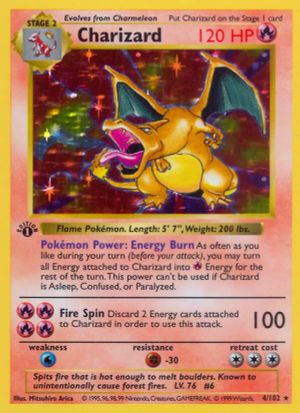 Charizard #4 | $721.93raw avg |
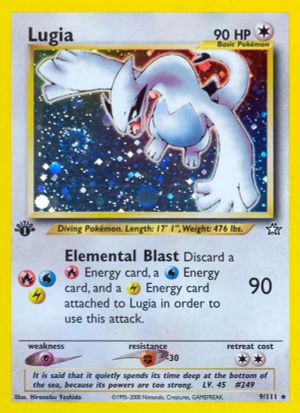 Lugia #9 | $543.07raw avg |
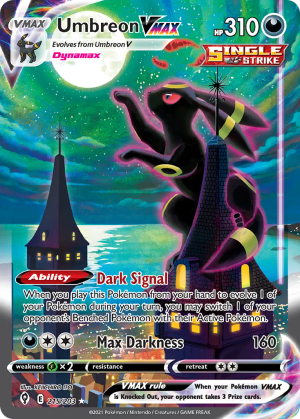 Umbreon VMAX #215 | $1,997.42raw avg |
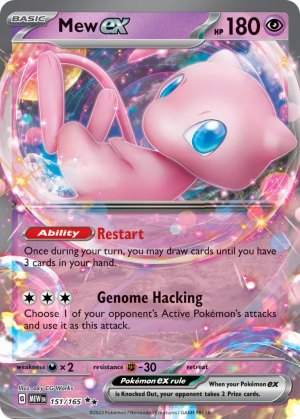 Mew ex #151 | $7.43raw avg |
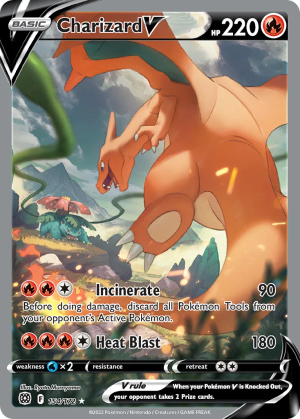 Charizard V #154 | $360.10raw avg |
Prices are 30-day rolling averages of real eBay sold listings. Click any card to view the full breakdown by grade and variant.
What Actually Makes a Pokemon Card Valuable
Six factors do almost all the work in setting a Pokemon card's price. They compound on each other. A 1st edition Base Set Charizard in PSA 10 hits all six at once, which is why it's the most famous graded card on the planet.
Grade
35% typical weight
The single biggest swing factor on most cards. Moving from raw to PSA 10 can multiply value 5 to 10 times on popular cards. Grade dominates because supply of true gem-mint copies is genuinely scarce.
Rarity
25% typical weight
Secret rares, illustration rares, and full art alts are pulled at low rates. The rarer the pull, the higher the resting price floor. Check the rarity symbol in the bottom right of the card.
Set Demand
15% typical weight
Some sets stay hot for years (Evolving Skies, Crown Zenith, 151). Others fade after release. Set-level demand sets the baseline that individual cards trade around.
Condition
12% typical weight
Even raw, near-mint cards sell for 2 to 5 times more than played. Whitening on edges, surface scratches, and centering all push price down measurably.
Edition / Print
8% typical weight
1st edition stamps, shadowless prints, prerelease holos, and error cards all command premiums over standard printings. Most relevant for vintage Pokemon.
Pop Report
5% typical weight
PSA population counts at each grade tell you the true supply of graded copies. A card with 50 PSA 10s is genuinely scarce. A card with 50,000 is not.
How to Check a Pokemon Card's Value in Three Steps
STEP 1
Identify the exact card
Check the set symbol in the bottom right, the card number (like 4/102), and any 1st edition or shadowless markings on the left side. Two cards with the same name from different sets can have wildly different values.
STEP 2
Assess condition honestly
Look at corners under bright light, check the edges for whitening, flip the card to inspect surface scratches, and check centering. A card you think is mint is usually near-mint at best. Be tough on yourself or grading will be.
STEP 3
Look up real sold comps
Use the search above to pull the card. The number you see is the 30-day average of completed eBay sales for that exact card, broken out by raw and each PSA grade. Match it to the condition you have.
Condition Matters More Than Most Collectors Realize
Near-mint or better
Lightly played
Moderately played
Heavily played or damaged
How Grading Changes the Math
Grading is the single biggest lever on Pokemon card value. The same physical card can sell for ten times more in a PSA 10 slab than it does raw. That spread exists because gem-mint copies are genuinely scarce, and graders authenticate at the same time, which removes counterfeit risk for the buyer.
The math only works in one direction. A card needs to be near-mint or better before grading is worth the cost. If you send a lightly played card to PSA and it comes back a 7, you have spent twenty dollars to confirm a number you already knew, and the slab will sell for less than the raw card did before grading.
The rule of thumb that works: only grade when the PSA 10 sold average is at least three times the raw price plus the cost of grading. So a card worth fifty raw needs a PSA 10 sold average above one hundred and seventy to be worth a twenty-dollar grading fee. Pull the raw and PSA 10 lines off the card page on PokeMiner before you make the call.
Sets and Eras: Why Some Pokemon Cards Hold Value
Vintage (1999 to 2003): Base Set, Jungle, Fossil, Team Rocket, Neo Genesis. These sets are the bedrock of the collector market. 1st edition holos in PSA 9 or 10 have outperformed almost every modern card class over the last decade because the supply is fixed and demand keeps climbing as collectors age into discretionary income.
e-Card era (2003 to 2004): Aquapolis, Skyridge, Expedition. These sets had small print runs and notoriously poor centering, which makes high grades rare and valuable. Crystal-types from this era regularly sell in the thousands of dollars in PSA 10.
EX through Black & White (2003 to 2013): Mixed era. EX cards (the original full-art FRLG and PowerKeepers holos) have been climbing. Most Black & White sets are still affordable except for trophy cards and some Japanese promos.
Modern (2019 to present): Sword & Shield Evolving Skies (Moonbreon), Crown Zenith, Scarlet & Violet 151, Prismatic Evolutions, and Surging Sparks. Illustration rares and special illustration rares from these sets drive most modern collector activity. Cards like Moonbreon and Pikachu Illustrator are the chase cards a generation of new collectors actually owns.
Why Not All Pokemon Cards Are Worth Something
Most cards in a 90s or early 2000s shoebox are worth a few cents each. Common and uncommon non-holo cards have effectively zero secondary market value below very-near-mint condition. That's not because they aren't real or aren't from a famous set. It's because millions of them were printed and almost nobody is looking to buy them at retail prices.
What's actually worth pulling out of an old collection: any holographic card (the shiny ones), any 1st edition stamp, anything from Base Set / Jungle / Fossil regardless of holo status if it's very clean, full art and secret rare cards from any modern set, and any card with promo, prerelease, or Trophy on the front. Everything else is a binder filler unless it's gem-mint.
The fastest triage for a large collection: separate out anything holographic and anything with a set symbol older than 2003. Run those through this page one by one. The rest of the binder is usually worth more as a complete bulk lot than as individually sold cards.
When Pokemon Card Prices Move
Pokemon card prices are not random. They move in predictable patterns once you know what to watch for. Set releases pull money out of older sets temporarily because the new chase cards absorb collector budgets. Six to eight weeks after a set drops, the older cards usually recover and often climb past their pre-release levels.
Tournament results and competitive meta shifts move tournament staples within days. When a Pokemon becomes meta-relevant in standard or expanded, every printable version sees a spike. Modern illustration rares can move 10 to 30 percent on a single viral YouTube or TikTok video featuring the card.
Seasonality is real but smaller than people think. Holidays and tax-refund season do show measurable lift on graded vintage cards. The bigger seasonal effect is grading turnaround: PSA submissions spike in January and June, which constrains supply of fresh slabs and pushes graded prices up for two to three months following each spike.
Frequently Asked Questions
- How do I know if my Pokemon card is worth money?
- Search for your card by name on this page to see its current sold-price average. Cards worth checking first are holographic rares, full arts, secret rares, illustration rares, and anything from sets older than 2003. Condition matters a lot. A near-mint copy can be worth five to ten times more than a played one of the exact same card.
- What determines a Pokemon card's value?
- Six factors drive Pokemon card values: rarity (how many were printed), condition (mint cards command big premiums), grade (PSA 10 sells for far more than raw), edition (1st edition and shadowless prints are worth more), set demand (popular sets like Evolving Skies hold value better), and current collector interest (cards featured in popular YouTube videos can spike overnight).
- Are Pokemon cards a good investment in 2026?
- The Pokemon card market has produced strong returns for graded vintage cards and modern illustration rares, but it carries real volatility. Base Set holographics in PSA 9 or 10 have appreciated steadily over the last decade. Modern chase cards like Moonbreon and Prismatic Evolutions Umbreon ex are riskier but have outpaced the market on shorter horizons. Always check real sold comps before treating any card as an investment, and only commit money you would be fine holding for five years.
- What is the most valuable Pokemon card?
- The Pikachu Illustrator promo is widely considered the most valuable Pokemon card, with a single PSA 10 copy selling for over five million dollars. Among cards in regular circulation, 1st Edition Base Set Charizard in PSA 10 is the most iconic, regularly trading between thirty and four hundred thousand dollars depending on the year. For modern cards, certain Trophy Pikachu promos and Japanese No-Rarity Base Set cards have sold above one hundred thousand dollars.
- How do I check the value of a Pokemon card?
- Start by identifying the exact card. Check the set symbol in the bottom right, the card number (for example 4/102), and any edition markings on the left side. Then search the card name on this page. The price you see is calculated from real eBay sold listings over the last 30 days, broken out by condition and grade so you can match it to what you actually own.
- Should I get my Pokemon cards graded?
- Grade a card when its expected graded value clearly exceeds the cost of grading plus the raw value. For example, if a raw card is worth fifty dollars and a PSA 10 of the same card sells for three hundred, paying twenty to fifty for grading is a reasonable bet if the card looks gem-mint. The reverse is also true: do not grade a card worth ten dollars raw if the PSA 10 only sells for forty. Look up both raw and PSA 10 sold averages on PokeMiner before sending anything off.
- What grading company should I use?
- PSA is the market leader and PSA 10s command the highest premiums on vintage cards. CGC has grown quickly and is often cheaper, with CGC 10 prices catching up on modern cards. BGS is respected but slower and pricier. For Pokemon specifically, PSA is the default choice unless you are budget-constrained, in which case CGC is the strongest alternative. ACE and TAG are emerging options but secondary market liquidity is still developing.
- Why are some Pokemon cards worth so much?
- Scarcity, nostalgia, and condition compound on each other. Base Set Charizard is iconic because it combines all three: a limited 1999 print run, peak childhood nostalgia for an entire generation, and very few copies that survived sleeves-free childhood play in mint condition. Modern cards can also command high prices when a low-population alt art lines up with a meta deck or a viral YouTube moment.
- How can I tell if my Pokemon card is real?
- Look at the texture of the holofoil under angled light, the rip test on the corner (real cards have a thin black layer between two paper layers), font and color saturation compared to a known-real copy, and the back pattern alignment. Counterfeits typically have a too-bright or too-dull holo, slightly off colors, and missing rosette details on the back. PokeMiner does not authenticate cards. If in doubt, send to PSA or CGC for grading, which includes authentication.
- What is the difference between raw and graded card prices?
- Raw means ungraded: the card has not been encapsulated by PSA, CGC, or BGS. Graded means a third party has authenticated and assigned a condition score (usually 1 through 10). Graded cards sell for premiums that scale with grade: a PSA 10 of a popular card often sells for five to ten times the raw value, while a PSA 9 might be two to three times raw, and a PSA 8 is often near raw. We show both side-by-side on every card page.
- Do Pokemon card values change over time?
- Yes, constantly. We see daily price action driven by new set releases (which can pull money out of older sets temporarily), tournament results (when a card becomes meta-relevant in TCG play), viral content (a single popular video can lift a card 20 percent in a week), and macro collecting trends. The 30-day rolling average on each card page smooths out daily noise so you can see the real trend.
- Where does PokeMiner get its data?
- All prices on PokeMiner come from real eBay completed sold listings, which are the most reliable source of actual transaction prices for Pokemon cards. We do not use seller asking prices, dealer pricing, or estimates. Every number you see represents money that actually changed hands. Listings are refreshed daily and broken out by condition and grade so the average matches what your specific card would sell for.
Track Your Collection's Value
Add your cards once and watch the total update every day as the market moves. Free to start.